Ragwort to Riches
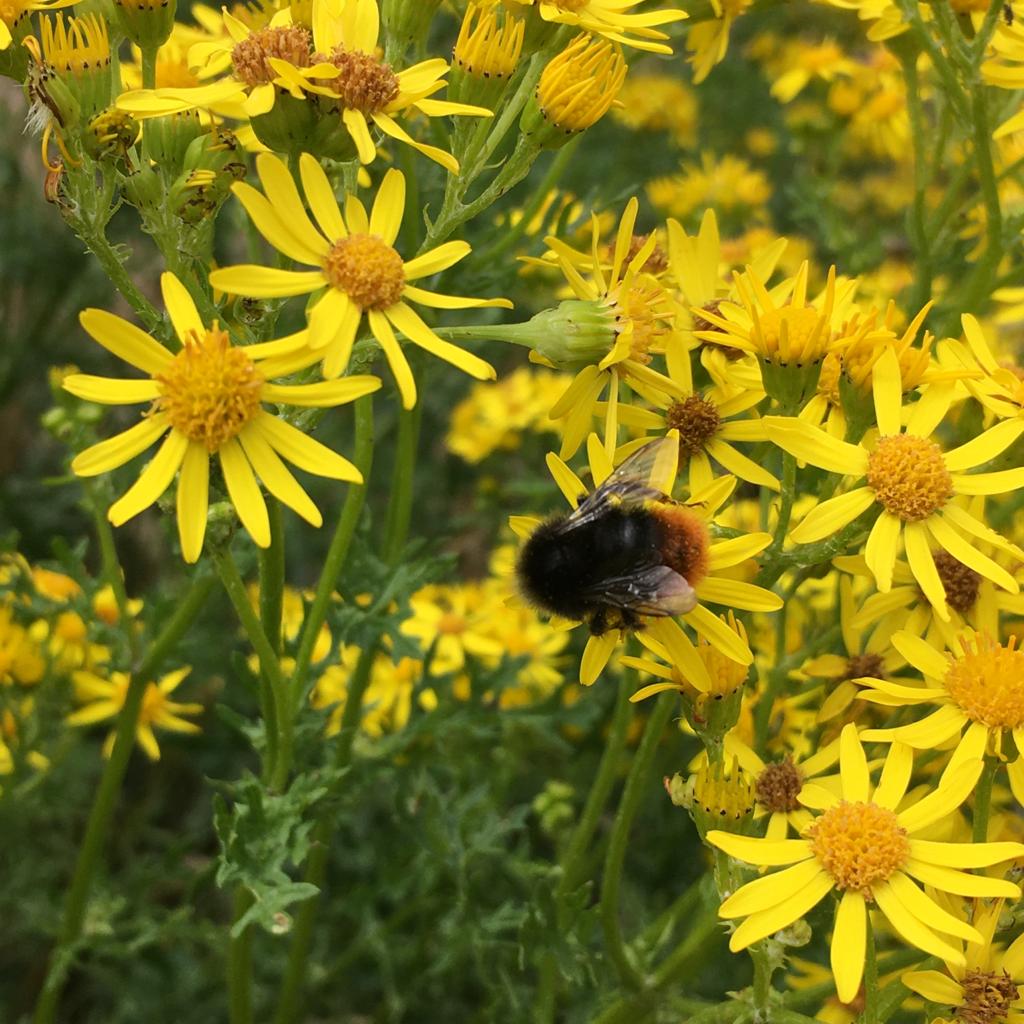
Here’s the truth about Ragwort and why it is so good in a suburban setting.
Few people know that SEA has a community allotment but now the Ragwort is in flower, those who do are complaining about it.
Research has shown that Ragwort is the seventh most important nectar producing plant. If you don’t know much about pollinator insects like bees, hoverflies, beetles, moths, and butterflies, then this probably doesn’t mean much to you, but all these insects are responsible for bringing a bountiful harvest of fruits and vegetables to our dining tables, estimated to be worth a staggering £600 million a year. And they do all this for free, as long as there is plenty of nectar for them to eat.
According to the charity Bumble Bee Conservation Trust, if pollinator insects all died out, the cost of hand pollinating fruits and vegetables would be around £1.8 billion a year. I don’t know how many people would need to work in fields, glasshouses and orchards to do this, but it would be a lot.
As it stands, we benefit hugely from pollinators, but their nectar sources are under threat. Many of the best ones are regularly dug up or sprayed off as they are mistakenly considered weeds. The beautiful top nectar producer, the dandelion, for example. We owe it to these important invertebrates to provide what they need, wherever we can.
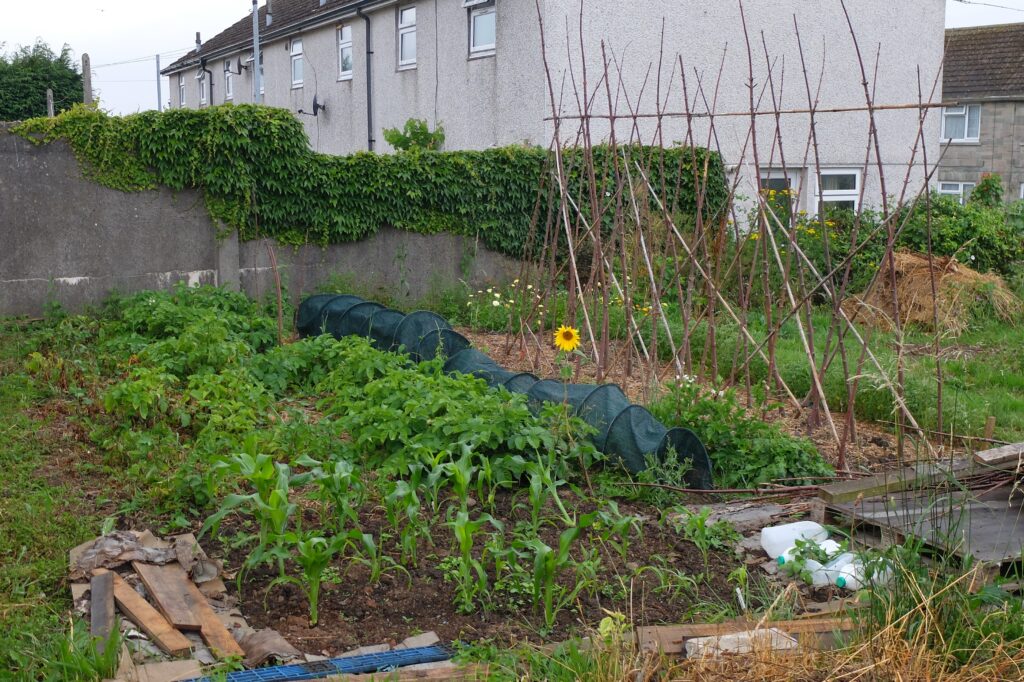
Grenfell Allotment 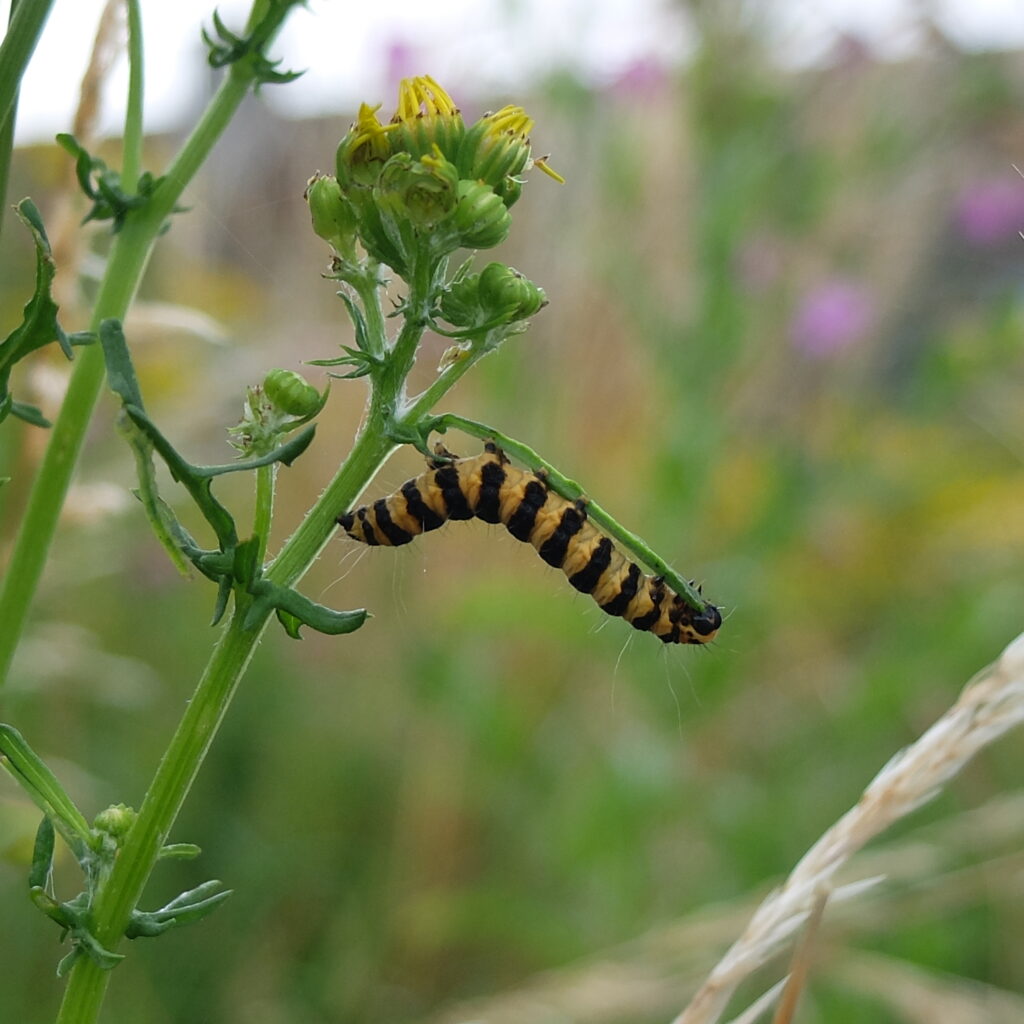
Cinnabar Moth Caterpillar
At this time of year, common Ragwort, grows tall and bright. It’s golden daisy-like flowers bring a welcome splash of colour to roadside verges, waste ground, gardens, and allotments. Like many wildflowers, Ragwort contains toxins and if it is cut with hay and finds its way into animal feed, it can cause problems for horses, but it is far less of a problem for humans or cattle. Of course, we don’t eat it but there are many invertebrates that do. And there are no horses in Grenfell Avenue where our allotment is.
Ragwort is a host plant for the very attractive, striking red and black, Cinnabar moth. The yellow and black striped Cinnabar caterpillars, feed on the plant and store toxins from it in their bodies, so they become unpalatable to predators. That’s a very neat trick.
If you visit our community allotment you will be able to see plenty of caterpillars wrapped around the stems of Ragwort, and also cardinal beetles, hoverflies, bumble bees, and butterflies, enjoying the nectar from the flowers.
Rumours abound that Ragwort is a dangerous plant that must be eradicated but it is not necessary, nor a legal requirement to remove Ragwort when it is growing more than ten metres from livestock. Furthermore, it is illegal to deliberately uproot wildflowers (see section 13 of the Wildlife and Countryside Act). And so our Ragwort will stay until it begins to decay in the autumn, which is when it sets seed, (not now as some visitors have suggested).
The seed falls around the base of the plant. It does not blow on the wind like a dandelion clock or thistle down. If the seeds fall on bare earth, they are likely to germinate. If the seeds fall onto other plants, then they will be prevented from having direct contact with the soil and are unlikely to germinate. The best way therefore of reducing the number of Ragwort plants on your plot, if you really feel you must, is to make sure that it is surrounded by other plants.
Our allotment is principally a no-dig venture. There are several reasons we try to keep digging to a minimum. The main one being that as soil is dug, weed seeds are brought to the surface, and without competition, will germinate. This is why so many good wild pollinator plants like dandelion and ragwort are described as disturbance weeds. They spring up where the earth is turned and left bare.
At Grenfell Avenue we are following a one-third for nature policy where one third of the allotment is not cultivated in the traditional sense. We are growing fruit bushes and small trees with a healthy understory of wildflowers and grasses. This way we can support wildlife and grow food. The allotment is full of life, not just insects but small birds, frogs, slow worms, and hedgehogs. Many of these need the shade and cover of tall grasses and plants to survive. This year we have several very large Ragwort plants that have emerged. We are not worried by them but instead are delighted to see so many pollinators visiting for a good feed. These welcome visitors are pollinating our tomatoes and beans, and food plants and flowers in neighbouring gardens.
Some passers by have asked why we have not removed the “terrible, dangerous, poisonous” Ragwort. Our answer is that there is no need and the benefits of having it are too great to forego. The seeds when they drop will not reach the ground and the cinnabar moth caterpillars are doing a sterling job of eating the plants. The plants will soon wither and die but before they do, at least the pollinators, and all that predate on them, can have a good feed.
For more information see Friends of the Earth myth buster on Ragwort here:
Is ragwort poisonous? A ragwort mythbuster | Friends of the Earth
And follow links to their Ragwort briefing note.