Fore Street
From the top, walking down on the left-hand side
1. Top of Fore St, from the area outside Woodside
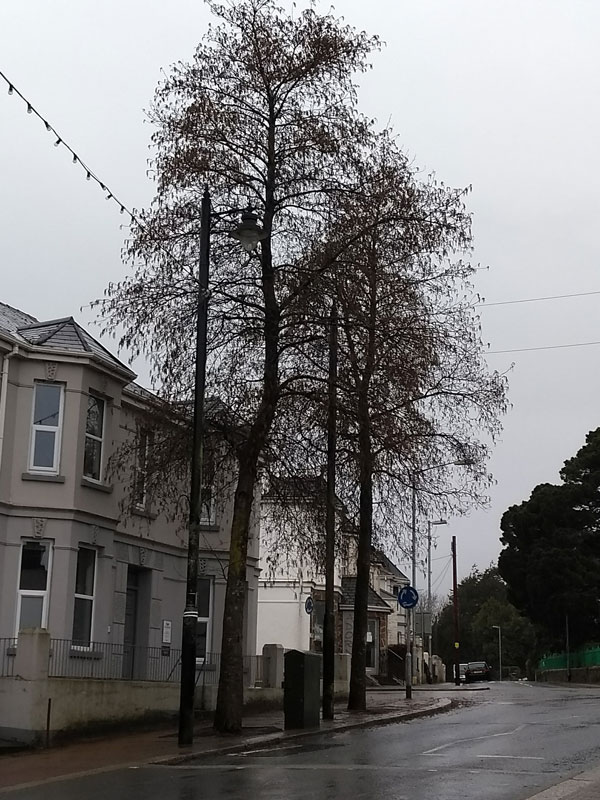
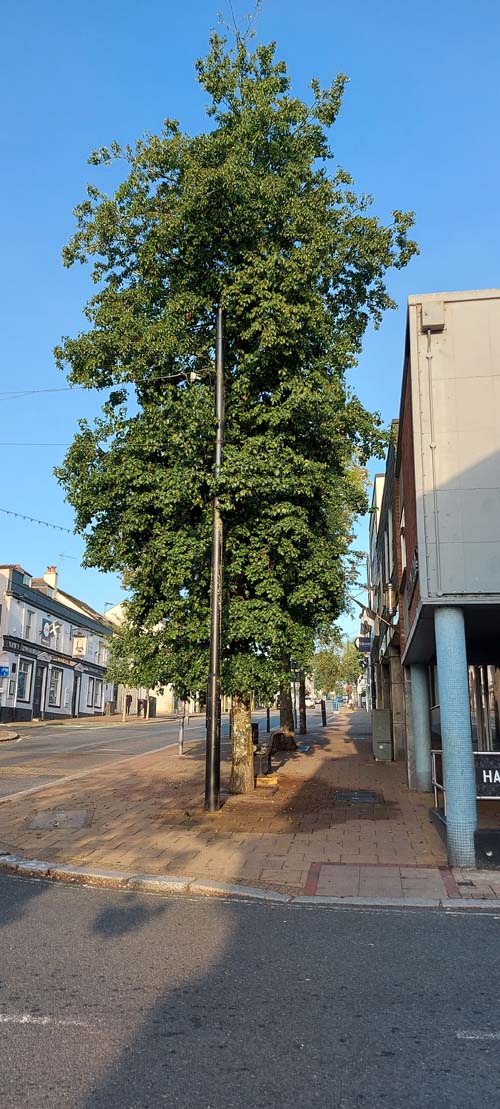
Opposite you are two Italian alders (Alnus cordata), above shown in Winter. While English alder flourishes beside streams (e.g. at Tincombe, Latchbrook), its Italian cousin flourishes on dry, poor soil and is a good street tree.
Note the heart-shaped, dark green leaves in Summer; and note that both last year’s woody fruit capsules, and next year’s flowers (catkins) can be seen together – best in Winter and Spring. Italian alders can be semi-evergreen in our Cornish climate.
There are two large Italian alders in Brunel school, and a whole wood of them planted below Summerfields in St Stephens.
There are two more lower down Fore St.
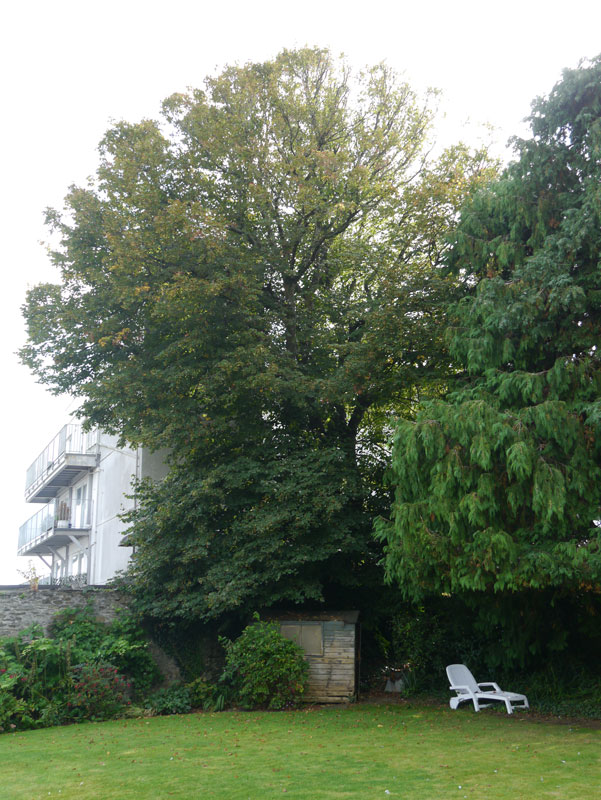
2. Walking down towards Bandits, look down the lane on the left to admire the lime tree at the back of Cedar Court. There’s a small yew in front. The picture shows the lime viewed from behind, in Cedar Court.
Limes have unequal base of the leaf, and shoots growing from the base. In Autumn the tree is covered by little light green ‘fairy wings’ surrounding the seed. Lime trees can be cut all round the top of the trunk (pollarded) to control their size, which is often done in avenues, e.g. in Victoria Road, St Budeaux, and Saltram House.
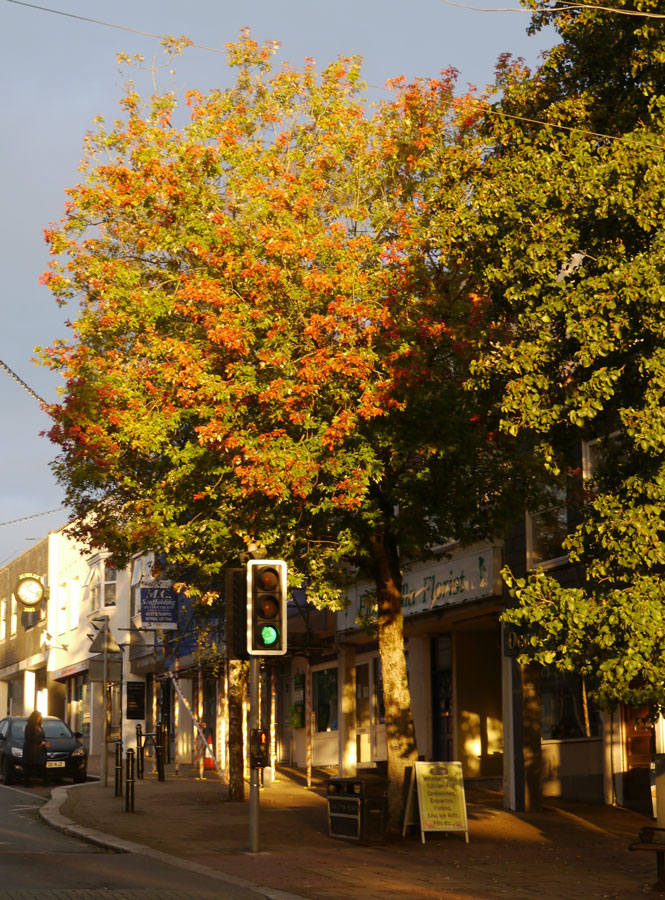
Outside Bandits is our largest of three silver maples (Acer saccharinum), similar to that opposite Culver Road, see below.
Note silver maple leaves are typical maple shape but deeply cut, and silver underneath. It is not native to Britain. It’s a good tree in paved areas, but it can have a heavy leaf fall. Fortunately it’s growing too far North for it to produce seeds as well! In Autumn it can show brilliant colours, which are best on the silver maple opposite Culver Road (shown below).
This tree outside Baker’s has much the largest trunk (175cm at chest height) and is probably the only tree that was already planted before the regeneration of Fore St in 1991. The Heritage Centre has a photograph that shows it.
As you walk on down, note the silver birch (Betula pendula), obviously named from its silver bark. These grow well in Saltash, but are not long-lived.
3. Opposite Wesley Road
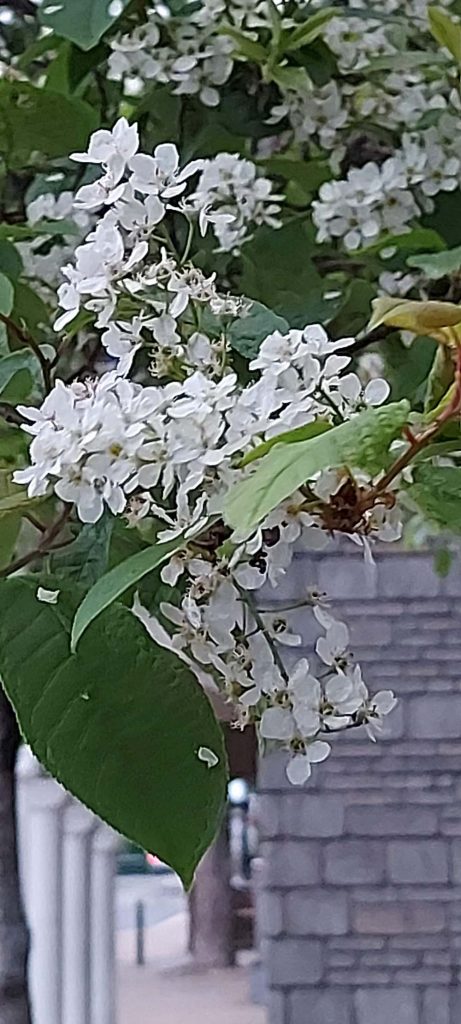
As well as another Italian alder on the corner, there is a pair of Bird cherries (Prunus padus), flowering in early May. The flowers are scented – but a bit high up! A British native tree, and some varieties are popular in gardens.
Note the typical ‘cherry’ type leaf, flowers in Spring and (bitter) fruit in Autumn.
4. Opposite Culver Road
There are four trees in line, all repeats of those described above. The first is another silver birch., then another silver maple (the best of the three), then another Italian alder and finally another silver birch.
Opposite, outside the Brunel Inn, stands a pair of Ginkgo biloba, the maidenhair tree. Note the leaf shape, with two lobes. It’s a good street tree, tall and narrow, with lovely Autumn yellow colours. The upper one has been repeatedly vandalised, was replaced in 2025 but its main trunk was broken again. Sadly, the only photo of its autumn splendour is missing.
5. Round the corner from the Community Centre
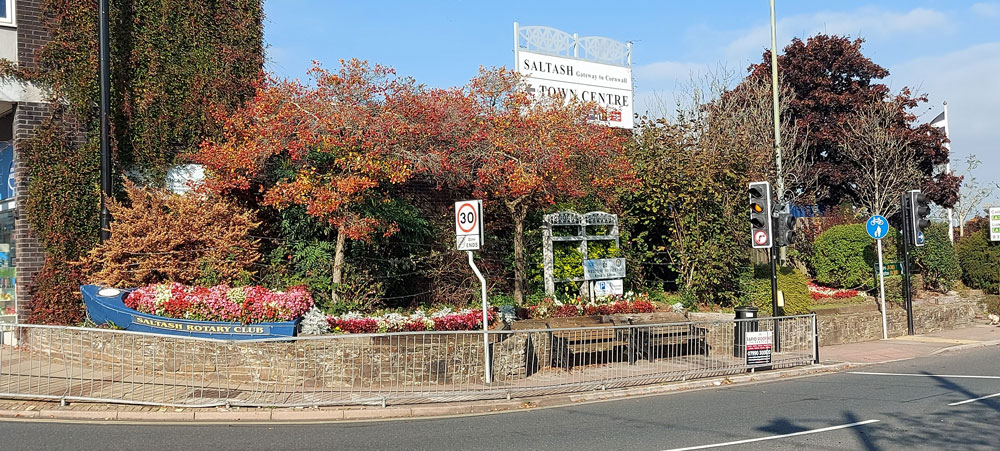
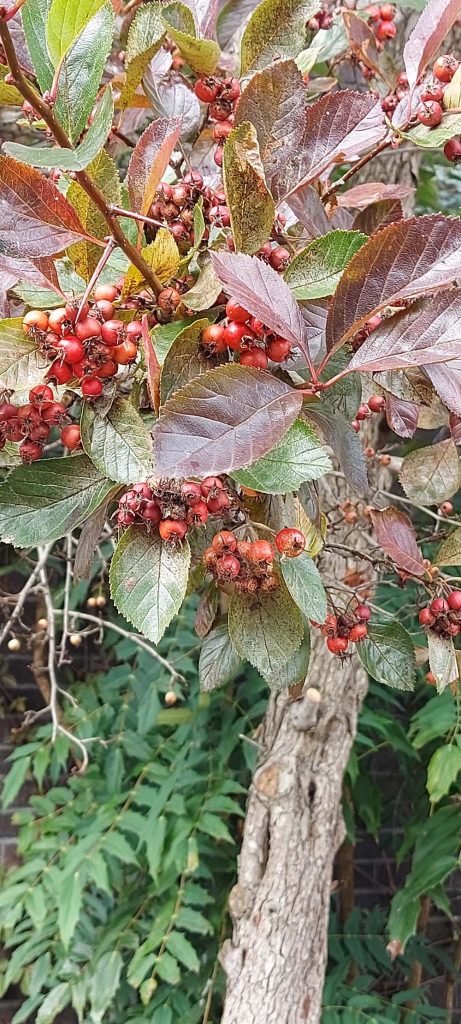
A great pair of Cockspur thorn Crataegus crus-gallis. Look hard to note the long, sharp thorns which give it the name. Although it’s in the hawthorn family, the leaves are simple, not lobed like hawthorns. It’s mainly planted for its flowers, fruit and Autumn colours.
Further on towards the bridge, note a hazel tree and two Norway maples (Acer platanoides)– the first of them is large and has red leaves, probably ‘’Crimson King’. It is visible in the street picture above. Note that Norway maples are similar to sycamores, but the leaves have brush points and their edges are smooth, not serrated as in sycamore. Their pairs of ‘helicopter’ seeds or samara are also wider apart than the sycamore. Norway maple is often planted, there are many around Saltash and they show great colour in Autumn.
On the other side of the road from the cockspur thorns, there is a small copse of about eleven rowan trees (or mountain ash, Sorbus aucuparia) around the seating area. They illustrate something we find, that rowans often don’t thrive in Saltash, probably because they prefer an open, stony hillside rather than our clay.